Introduction
As physiotherapy practices grow from a single clinic to multiple branches, managing daily operations becomes increasingly complex. Patient records, appointment scheduling, billing, staff coordination, and financial reporting can quickly become fragmented when each location operates independently. This lack of centralization often leads to inefficiencies, inconsistent patient experiences, and limited visibility into overall business performance.
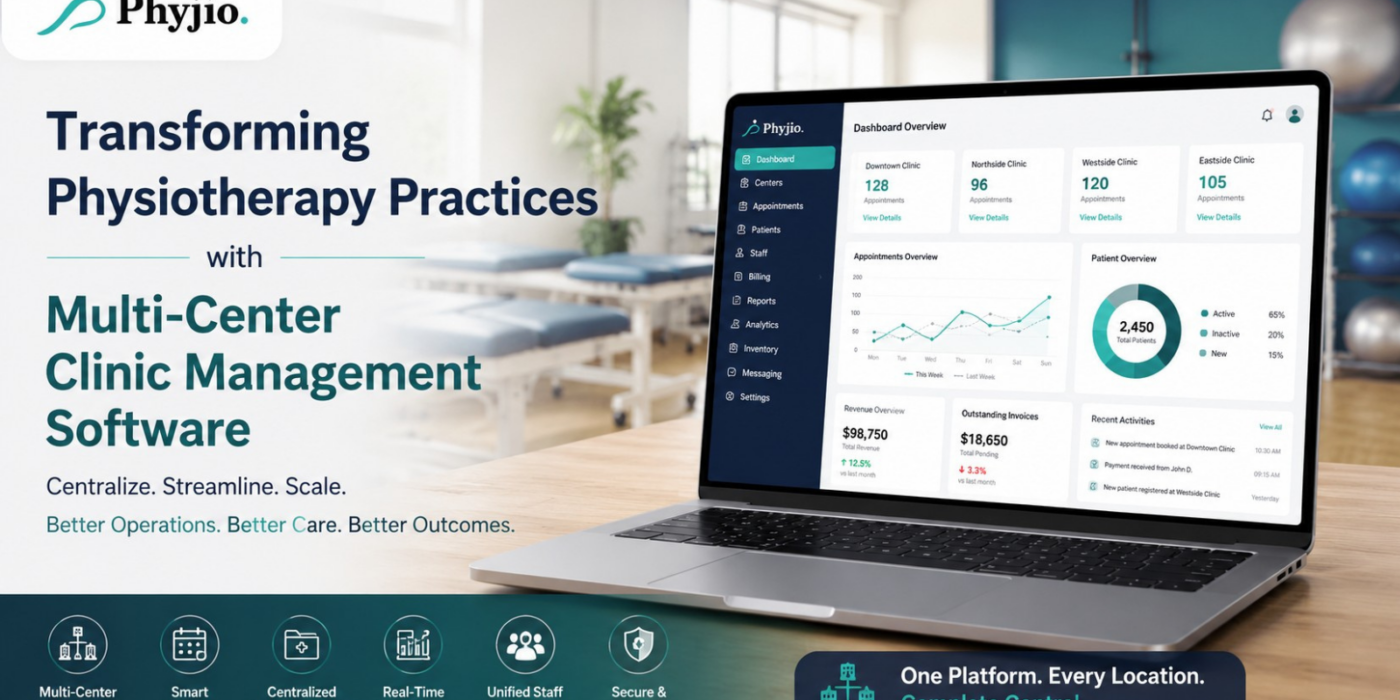
A modern multi-center clinic management software addresses these challenges by bringing all clinic locations onto a single, cloud-based platform. It enables clinic owners and managers to oversee appointments, patient records, therapist schedules, billing, and analytics from one centralized dashboard. Whether you operate two clinics or an expanding healthcare network, the right software helps standardize workflows, improve operational efficiency, and deliver consistent, high-quality patient care.
TL;DR
Multi-center clinic management software is designed to help physiotherapy practices manage multiple clinic locations through one centralized system. It provides unified access to patient records, appointment scheduling, billing, therapist management, reporting, and analytics while improving collaboration, reducing administrative work, and supporting business growth. Cloud-based solutions also enable secure access from anywhere, making them ideal for expanding physiotherapy organizations.
Featured Snippet: What is Multi-Center Clinic Management Software?
Multi-center clinic management software is a centralized platform that enables physiotherapy practices to manage multiple clinic locations from a single system. It integrates patient records, appointments, billing, staff management, reporting, and business analytics to improve operational efficiency, ensure data consistency, and provide a seamless patient experience across all branches.
Why Growing Physiotherapy Practices Need Multi-Center Management Software
Expanding into multiple locations creates opportunities for business growth, but it also introduces operational challenges. Without centralized software, clinic owners often rely on disconnected systems, spreadsheets, or manual processes that make it difficult to maintain consistency.
Common challenges include:
-
Duplicate patient records across branches
-
Scheduling conflicts between therapists
-
Delayed financial reporting
-
Inconsistent billing procedures
-
Limited visibility into branch performance
-
Difficulty monitoring staff productivity
-
Poor communication between clinic locations
A centralized physiotherapy practice management software eliminates these issues by connecting every clinic through one secure platform. Managers gain real-time insights into operations, while therapists and administrative staff access the same up-to-date information, regardless of location.
How Multi-Center Physiotherapy Software Works
Modern multi-location physiotherapy software is typically cloud-based, allowing authorized users to securely access clinic data from any location.
The software functions through a centralized database that synchronizes information in real time. When a receptionist updates an appointment or a physiotherapist completes treatment notes, the information becomes immediately available to authorized users across all branches.
A typical workflow includes:
-
Patients book appointments online or through reception.
-
Appointments are assigned to available therapists.
-
Therapists access patient history and treatment plans.
-
Clinical notes and progress are updated after each session.
-
Billing and insurance claims are generated automatically.
-
Managers monitor performance through centralized dashboards.
This unified workflow reduces manual work while improving accuracy and collaboration across multiple clinics.
Core Features of Multi-Center Physiotherapy Clinic Management Software
Choosing the right solution requires understanding the features that support both clinical and business operations.
1. Centralized Patient Records
A shared patient database allows authorized clinicians to access medical history, treatment plans, assessment reports, and progress notes regardless of which clinic the patient visits.
Benefits include:
-
Improved continuity of care
-
Reduced duplicate records
-
Faster clinical decision-making
-
Better patient experience
2. Multi-Branch Appointment Scheduling
A centralized scheduling system enables clinics to manage appointments across multiple locations while minimizing conflicts.
Key capabilities include:
-
Online booking
-
Therapist availability tracking
-
Automated reminders
-
Waitlist management
-
Calendar synchronization
3. Therapist and Staff Management
Managing therapists across several branches becomes easier with role-based scheduling and workforce management tools.
These features help:
-
Allocate therapists efficiently
-
Track working hours
-
Monitor productivity
-
Manage leave requests
-
Reduce scheduling conflicts
4. Billing and Revenue Management
Integrated billing simplifies financial operations by automating invoices, payment tracking, insurance claims, and outstanding balances.
Benefits include:
-
Faster billing cycles
-
Improved cash flow
-
Reduced administrative workload
-
Accurate financial reporting
5. Electronic Medical Records (EMR)
Integrated EMR functionality enables therapists to maintain digital treatment records, clinical assessments, and progress tracking.
Common EMR features include:
-
Digital patient charts
-
Treatment history
-
Clinical documentation
-
Secure record storage
-
Easy retrieval across branches
6. SOAP Notes and Clinical Documentation
Digital SOAP note templates standardize documentation across all clinics while reducing paperwork and improving compliance.
Advantages include:
-
Consistent documentation
-
Faster note completion
-
Improved treatment tracking
-
Better clinical communication
7. Analytics and Business Intelligence
Centralized reporting provides valuable insights into clinic performance.
Typical dashboards include:
-
Revenue by branch
-
Appointment trends
-
Therapist utilization
-
Patient retention
-
Cancellation rates
-
Financial performance
-
Operational KPIs
These insights support better business decisions and long-term growth planning.
8. Role-Based Access and Security
Not every employee requires access to all clinic data. Role-based permissions ensure that users only see the information relevant to their responsibilities while protecting sensitive patient information.
Security features often include:
-
User authentication
-
Data encryption
-
Audit logs
-
Backup and recovery
-
Compliance with healthcare regulations
Benefits of Multi-Center Clinic Management Software
For Clinic Owners
-
Centralized control over all branches
-
Real-time business insights
-
Simplified expansion
-
Higher operational efficiency
-
Better financial visibility
For Practice Managers
-
Easier staff coordination
-
Standardized workflows
-
Automated reporting
-
Reduced manual administration
-
Improved resource planning
For Physiotherapists
-
Instant access to patient history
-
Better collaboration between branches
-
Faster documentation
-
Reduced administrative burden
-
More time for patient care
For Administrative Staff
-
Simplified appointment management
-
Automated billing processes
-
Reduced paperwork
-
Better communication
-
Faster patient check-in
For Patients
-
Consistent care across locations
-
Easy appointment booking
-
Access to treatment history
-
Shorter waiting times
-
Improved overall experience
Multi-Center Software vs Single Clinic Software
|
Feature |
Multi-Center Software |
Single Clinic Software |
|---|---|---|
|
Patient Records |
Shared across all branches |
Limited to one clinic |
|
Appointment Scheduling |
Centralized |
Individual clinic only |
|
Reporting |
Enterprise-wide analytics |
Basic reports |
|
Billing |
Unified financial management |
Separate billing |
|
Staff Management |
Cross-location scheduling |
Single location |
|
Scalability |
Excellent |
Limited |
|
Administration |
Centralized dashboard |
Local management |
|
Business Insights |
Real-time multi-branch reporting |
Limited visibility |
|
Operational Efficiency |
High |
Moderate |
Common Challenges Solved by Multi-Center Clinic Management Software
Managing multiple physiotherapy clinics without a centralized system often leads to operational bottlenecks that affect productivity, revenue, and patient satisfaction. A modern physiotherapy multi-center management software solves these issues by standardizing workflows and providing complete visibility across all branches.
Duplicate Patient Records
Patients visiting different locations often end up with multiple records, making it difficult to track treatment history accurately.
Solution:
-
Centralized patient database
-
Unique patient identification
-
Real-time synchronization across branches
Appointment Scheduling Conflicts
Manual scheduling increases the risk of double bookings, therapist conflicts, and missed appointments.
Solution:
-
Centralized appointment calendar
-
Automated scheduling
-
Therapist availability tracking
-
SMS and email reminders
Inconsistent Billing
Different billing practices across branches can lead to errors, delayed payments, and compliance issues.
Solution:
-
Standardized billing workflows
-
Automated invoice generation
-
Insurance claim management
-
Consolidated financial reporting
Limited Branch Visibility
Without centralized reporting, owners struggle to monitor performance across locations.
Solution:
-
Real-time dashboards
-
Revenue tracking by branch
-
Patient volume analysis
-
Therapist productivity reports
Poor Staff Coordination
Managing therapists across multiple clinics becomes increasingly difficult as the organization grows.
Solution:
-
Shared staff schedules
-
Leave management
-
Role-based permissions
-
Performance monitoring
How AI is Transforming Multi-Center Physiotherapy Management
Artificial Intelligence (AI) is reshaping healthcare operations by automating repetitive tasks and providing actionable insights. Modern physiotherapy enterprise software increasingly incorporates AI-powered features that enhance efficiency and support better clinical and business decisions.
AI-Powered Appointment Scheduling
AI can analyze therapist availability, patient preferences, and historical booking patterns to recommend the most suitable appointment slots, reducing scheduling conflicts and improving clinic utilization.
Intelligent Clinical Documentation
AI-assisted documentation tools help physiotherapists generate structured clinical notes and SOAP documentation faster, reducing administrative workload while maintaining consistency.
Predictive Patient Retention
By analyzing attendance patterns and treatment progress, AI can identify patients who may discontinue therapy and trigger automated follow-up reminders to improve retention.
Revenue Forecasting
AI-powered analytics help clinic owners forecast revenue based on appointment trends, seasonal demand, and branch performance, enabling more informed financial planning.
Workflow Automation
Routine administrative tasks such as appointment confirmations, payment reminders, insurance verification, and patient follow-ups can be automated, allowing staff to focus more on patient care.
Cloud-Based vs On-Premise Multi-Center Software
Choosing the right deployment model depends on your clinic’s size, IT resources, and long-term growth strategy.
|
Feature |
Cloud-Based Software |
On-Premise Software |
|---|---|---|
|
Initial Cost |
Lower |
Higher |
|
Accessibility |
Anywhere with internet |
Local network only |
|
Scalability |
Excellent |
Limited |
|
Software Updates |
Automatic |
Manual |
|
Maintenance |
Vendor-managed |
In-house IT |
|
Data Backup |
Automated |
Manual |
|
Disaster Recovery |
Built-in |
Requires additional infrastructure |
|
Best For |
Growing and multi-location clinics |
Organizations with strict internal IT policies |
For most expanding physiotherapy practices, cloud-based software offers greater flexibility, lower maintenance costs, and easier scalability.
How to Choose the Best Multi-Center Physiotherapy Software
Selecting the right platform is a strategic decision that impacts both patient care and operational efficiency.
Evaluation Checklist
✔ Supports multiple clinic locations
✔ Centralized patient records
✔ Integrated EMR and SOAP notes
✔ Online appointment scheduling
✔ Billing and insurance management
✔ Role-based access control
✔ Real-time analytics dashboard
✔ Mobile accessibility
✔ Cloud-based infrastructure
✔ Secure data encryption
✔ Compliance with healthcare regulations
✔ Integration with third-party applications
✔ AI-powered automation capabilities
✔ Reliable customer support and training
Choosing software with these capabilities ensures your practice can scale efficiently while maintaining high standards of care.
Best Practices for Implementation
Successful implementation requires careful planning and staff engagement.
1. Assess Existing Workflows
Document current processes and identify inefficiencies before migrating to a new system.
2. Clean Existing Data
Remove duplicate patient records, correct outdated information, and standardize data formats to ensure a smooth migration.
3. Train Staff
Provide comprehensive training for therapists, receptionists, and administrators to encourage adoption and minimize disruptions.
4. Start with a Pilot Clinic
Implement the software at one location first, gather feedback, and resolve issues before rolling it out across all branches.
5. Monitor Performance
Track key performance indicators (KPIs) such as appointment utilization, patient satisfaction, revenue growth, and administrative efficiency to measure success.
Future Trends in Multi-Center Physiotherapy Software
Healthcare technology continues to evolve, and physiotherapy practices are increasingly adopting advanced digital solutions.
Emerging trends include:
-
AI-assisted clinical decision support
-
Voice-enabled clinical documentation
-
Wearable device integration for remote rehabilitation
-
Telehealth and hybrid care models
-
Predictive business intelligence
-
Personalized patient engagement through automation
-
Internet of Things (IoT) integration for rehabilitation monitoring
-
Advanced interoperability with hospital information systems
These innovations will enable physiotherapy organizations to deliver more personalized care while improving operational efficiency and long-term scalability.
People Also Ask (PAA)
What is multi-center clinic management software?
Multi-center clinic management software is a centralized platform that helps healthcare organizations manage multiple clinic locations through a single system, including patient records, appointments, billing, reporting, and staff management.
Can physiotherapy clinics share patient records across branches?
Yes. Cloud-based multi-center software allows authorized clinicians to securely access patient records across all clinic locations, ensuring continuity of care.
Is cloud-based physiotherapy software secure?
Reputable cloud solutions use encryption, access controls, automated backups, and security monitoring to protect patient information and maintain healthcare compliance.
What are the benefits of centralized clinic management?
Centralized management improves operational efficiency, standardizes workflows, enhances reporting, reduces administrative work, and provides better visibility into business performance.
Can physiotherapy software manage multiple branches?
Yes. Enterprise physiotherapy software is specifically designed to support multiple clinic locations while centralizing appointments, patient records, staff scheduling, billing, and analytics.
Frequently Asked Questions (FAQ)
What is the primary purpose of multi-center physiotherapy software?
Its primary purpose is to centralize operations across multiple clinics, making it easier to manage patient care, appointments, billing, staff, and business reporting from one platform.
How does centralized software improve patient care?
By providing clinicians with instant access to complete treatment histories and clinical notes, centralized software supports consistent and informed decision-making across all branches.
Is multi-center software suitable for small physiotherapy chains?
Yes. Even practices with two or three locations can benefit from centralized management, especially if they plan to expand further.
How much does multi-center clinic management software cost?
Pricing varies depending on the number of users, clinic locations, features, deployment model, and customization requirements. Many providers offer subscription-based pricing to accommodate practices of different sizes.
Conclusion
As physiotherapy organizations expand, managing multiple clinics manually becomes increasingly challenging. Disconnected systems, inconsistent workflows, and fragmented patient information can slow growth and impact the quality of care.
A modern multi-center clinic management software provides a centralized solution that unifies patient records, appointment scheduling, therapist management, billing, reporting, and analytics across every location. By automating administrative tasks and delivering real-time insights, it empowers clinic owners to improve operational efficiency, make data-driven decisions, and provide a consistent patient experience.
Investing in scalable, cloud-based physiotherapy software is more than a technology upgrade—it is a strategic step toward sustainable growth, stronger collaboration, and better patient outcomes. As AI and healthcare automation continue to evolve, practices that embrace centralized digital solutions will be better positioned to meet future demands and remain competitive in an increasingly connected healthcare landscape.