Hybrid Rehab Is Here: What Clinics Need to Know
The delivery of musculoskeletal care is undergoing a profound structural shift. Traditional brick-and-mortar physiotherapy clinics face shifting patient expectations, rising operational costs, and clinician burnout. The solution is no longer a choice between traditional hands-on care and fully remote digital health solutions.
Instead, forward-thinking practices are adopting the hybrid rehabilitation model—a seamless ecosystem that integrates in-person clinical expertise with advanced digital physiotherapy tools. This comprehensive guide outlines how hybrid rehab works, the technology powering it, and how clinic owners can successfully transition to this modern care standard.
TL;DR Summary
-
Definition: Hybrid rehab blends essential in-person manual therapy with digital touchpoints like telehealth, remote patient monitoring (RPM), and mobile health apps.
-
The Catalyst: Clinics adopting hybrid care see up to a 30% reduction in patient drop-out rates and significantly higher lifetime value per patient.
-
The Tech Stack: Powered by physiotherapy practice management software, AI-driven documentation, automated home exercise programs (HEPs), and wearable devices.
-
The Value: Patients gain flexibility and autonomy; clinics maximize clinical productivity, scale past geographic limitations, and secure recurring revenue streams.
What Is Hybrid Rehab?
Hybrid rehabilitation (or hybrid physiotherapy) is a healthcare delivery model that strategically combines traditional, in-person clinical visits with asynchronous and synchronous digital health technologies—including virtual consultations, remote patient monitoring (RPM), and digital home exercise programs (HEPs)—to provide continuous, data-driven musculoskeletal care.
Unlike pure telehealth solutions that emerged out of necessity during regulatory lockdowns, hybrid care physiotherapy treats digital platforms as an extension of the physical clinic. It treats rehabilitation as a continuous journey rather than a fragmented series of sporadic appointments.
Why Hybrid Rehabilitation Is Becoming the New Standard
The traditional, exclusively in-person physiotherapy clinic model suffers from systemic vulnerabilities. On average, industry benchmarks show that up to 70% of patients fail to complete their prescribed course of physical therapy, often due to scheduling conflicts, financial constraints, or a lack of perceived accountability. This attrition undermines rehabilitation outcomes and destabilizes clinic predictable revenue.
Concurrently, healthcare consumerism is rising. Modern patients demand the same digital convenience from their healthcare providers that they experience in banking or retail. By incorporating digital physiotherapy options, clinics eliminate friction, maximize patient engagement software touchpoints, and maintain a direct line of communication throughout the entire recovery lifecycle.
How Hybrid Physiotherapy Works
A successful hybrid rehabilitation program operates as a fluid loop rather than a rigid, linear timeline.
[Initial In-Clinic Assessment] ➔ [Digital Treatment Plan & HEP] ➔ [Remote Patient Monitoring] ➔ [Asynchronous Chat / Virtual Check-In] ➔ [Targeted In-Person Manual Therapy]
-
The Intake and Diagnostics: The patient visits the physical clinic for an initial comprehensive assessment. The physiotherapist performs manual diagnostics, establishes baseline mobility metrics, and builds trust.
-
The Digital Transition: The therapist builds a customized treatment plan using physiotherapy patient management software. This plan is pushed directly to the patient’s smartphone via a dedicated mobile health app.
-
Continuous Remote Engagement: Between weekly or bi-weekly in-clinic appointments, the patient executes their home exercise program. Wearable devices or computer-vision tracking tools log compliance, pain levels, and range of motion (ROM) data.
-
Adaptive Care Adjustments: The clinician reviews this real-time data asynchronously. If a patient logs high pain scores, the therapist can modify the exercises remotely or schedule an online physiotherapy appointment to address the issue before the next scheduled in-person visit.
Components of a Successful Hybrid Rehab Model
To build a high-performing hybrid physiotherapy clinic, six core pillars must be integrated into a unified clinical workflow:
1. In-Clinic Treatment
Hands-on intervention remains irreplaceable for acute joint mobilizations, advanced manual therapy, and intricate diagnostic testing. In a hybrid framework, in-clinic time is highly intentional, focusing strictly on treatments that cannot be replicated at home.
2. Virtual Consultations
Synchronous virtual consultations via HIPAA-compliant video platforms are used for progress reviews, ergonomic evaluations, and educational sessions. This saves patients travel time while preserving the clinician’s billable hours.
3. Home Exercise Programs (HEPs)
Static paper handouts are replaced with interactive, video-based digital health solutions. These applications provide step-by-step visual guidance, track completion metrics, and allow patients to log qualitative feedback directly into their profiles.
4. Remote Monitoring
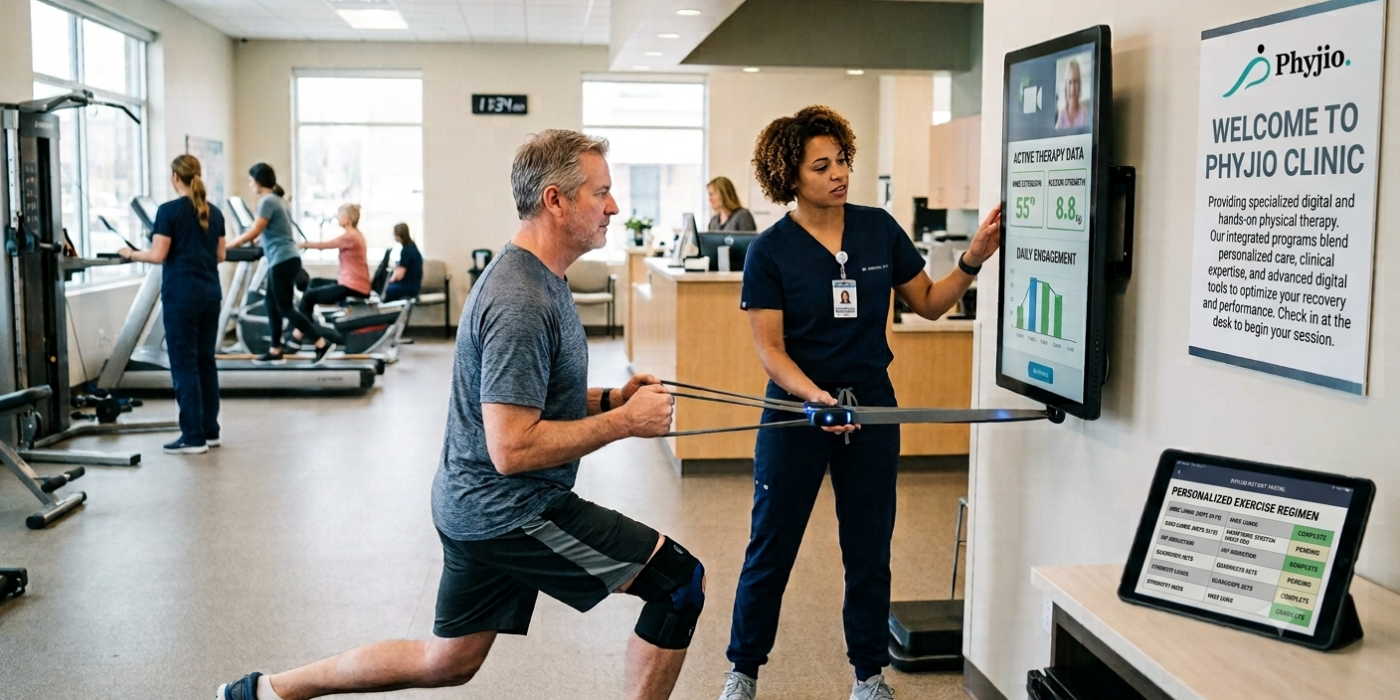
Remote patient monitoring leverages connected hardware (such as smart resistance bands or wearable sensors) and soft software metrics (patient-reported outcome measures, or PROMs) to provide the clinical team with objective visibility into home-based performance.
5. Digital Communication
Secure, asynchronous messaging channels via a patient portal ensure patients can ask quick questions about their recovery without needing to call the front desk or wait days for an email reply.
6. Practice Management Software
The technological engine of the operation. A modern physiotherapy practice management software acts as the single source of truth, synchronizing clinical data, electronic medical records (EMR), and operational touchpoints.
Technologies That Power Hybrid Rehabilitation
The viability of a hybrid care model relies heavily on a clinic’s healthcare SaaS infrastructure. To deliver seamless care, your technology stack must include:
-
Cloud-Based EMR & Scheduling Systems: Physiotherapy scheduling software must allow patients to book both in-person and virtual physical therapy appointments from a single portal.
-
AI-Powered Documentation Tools: Software that leverages ambient clinical intelligence to listen to patient conversations (in-person or virtual) and automatically generate structured SOAP notes, drastically increasing clinic productivity.
-
Computer Vision and Kinetic Tracking: Mobile applications that utilize the patient’s smartphone camera to analyze movement mechanics, calculate joint angles, and offer real-time correctional feedback during exercises.
Benefits of the Hybrid Care Model
Benefits for Patients
-
Unrivaled Flexibility: Patients fit their rehabilitation journeys around busy work and family schedules, reducing missed appointments.
-
Enhanced Accountability: Knowing that their physiotherapist has real-time visibility into their digital completion metrics keeps patients motivated.
-
Better Long-Term Outcomes: Continuous touchpoints reduce the likelihood of re-injury and foster long-term self-management strategies for chronic pain management.
Benefits for Physiotherapy Clinics
-
Optimized Chair Time: By shifting routine check-ins and education to virtual formats, clinics optimize physical space for high-margin, hands-on therapies.
-
Expanded Geographic Reach: A hybrid clinic can acquire and treat patients living hours away who only need to commute for occasional physical evaluations.
-
Diversified Revenue Streams: Implementing remote monitoring and digital subscriptions creates stable, recurring revenue separate from traditional time-for-money models.
Comparing Care Models
|
Feature |
Traditional Physiotherapy |
Fully Virtual Physiotherapy |
Hybrid Rehabilitation Model |
|
Primary Delivery Mode |
100% Brick-and-Mortar |
100% Telehealth |
Blended (Physical + Digital) |
|
Manual Therapy Capability |
Excellent |
None |
Strategic & Targeted |
|
Patient Adherence Tracking |
Subjective / Self-Reported |
App-Based |
High (Objective Data + In-Person Checks) |
|
Clinic Scalability |
Low (Limited by square footage) |
High (Lacks physical touch) |
Optimal (Scales space and retention) |
|
Geographic Limitations |
Strict (~10-15 mile radius) |
Regional/National |
Broad Regional Hybrid Network |
Role of Practice Management Software in Hybrid Care
Transitioning to hybrid care fails if workflows are fragmented across isolated point solutions. Your physiotherapy clinic software must function as a centralized hub to orchestrate operations:
Scheduling & Workflow Automation
The scheduling system must differentiate between physical treatment rooms and virtual telehealth queues. Automated workflows should instantly trigger a pre-appointment technical check link for a virtual patient, or a digital check-in form for an in-person arrival.
EMR, Documentation, and SOAP Notes
A unified electronic medical records system connects digital exercise logs with clinical SOAP notes. When a therapist opens a patient’s chart, they should immediately see automated visual graphs charting the patient’s remote compliance alongside their in-clinic clinical progression.
Billing and Healthcare Compliance
Hybrid models require robust billing engines capable of processing traditional insurance claims, out-of-pocket digital subscriptions, and specialized tele-rehab billing codes. Crucially, all data transfer channels must maintain strict HIPAA compliance to ensure patient data privacy.
How AI Is Transforming Hybrid Rehabilitation
Artificial Intelligence is the primary catalyst accelerating hybrid care adoption. Rather than replacing the human physiotherapist, AI removes the administrative burdens that lead to burnout.
AI-Driven Documentation and Automation
Clinicians spend up to 2 hours per day on manual data entry. AI-powered clinical documentation engines transcribe patient visits, extract key subjective findings, and draft comprehensive SOAP notes for the clinician’s review within seconds.
Predictive Analytics & Personalized Medicine
By analyzing data aggregated across thousands of past orthopedic rehabilitation and sports injury rehabilitation cases, predictive analytics platforms can alert a therapist if a patient’s current trajectory indicates a high risk of dropping out or re-injury. This allows for proactive, personalized clinical interventions before a setback occurs.
Common Challenges and Solutions
Challenge 1: Clinician Resistance to Technology
-
The Symptom: Physical therapists may worry that digital tools dilute the quality of care or add to their administrative load.
-
The Solution: Select intuitive rehabilitation software that cuts documentation time rather than adding extra steps. Position technology as a tool that amplifies their clinical impact.
Challenge 2: Patient Digital Literacy Barriers
-
The Symptom: Older demographics or individuals with severe chronic pain management needs may struggle with mobile health apps.
-
The Solution: Standardize a 5-minute onboarding process during the initial in-person visit. Have the front-desk staff download the app onto the patient’s device and run through a sample exercise together.
Implementation Checklist for Clinic Owners
If you are ready to transition your traditional practice into a high-performance hybrid clinic, execute the following roadmap:
-
Audit Your Current Software Stack: Verify if your existing EMR and physiotherapy patient management software supports native telehealth, secure messaging, and app integrations.
-
Standardize Hybrid Clinical Pathways: Map out exactly which conditions (e.g., post-operative ACL reconstruction, non-specific low back pain) follow a structured blended timeline.
-
Train Clinical and Administrative Staff: Conduct training sessions focusing on virtual webside manner, asynchronous messaging protocols, and digital troubleshooting.
-
Update Billing and Compliance Protocols: Ensure your billing matrices account for telehealth codes and subscription structures while verifying end-to-end HIPAA compliance.
-
Launch a Patient Onboarding Flow: Create simple physical and digital collateral that explains the benefits of the hybrid model to new patients during intake.
Future Trends in Hybrid Rehab
Looking ahead, the line between digital health solutions and physical practice will dissolve entirely.
We are moving toward an era of predictive rehabilitation, where wearable devices continuously stream biomechanical data into integrated healthcare ecosystems. Furthermore, the commercial validation of digital therapeutics (DTx)—software applications clinically proven to treat medical conditions—will allow physiotherapists to prescribe software-driven protocols that complement traditional musculoskeletal care. Clinics that build the infrastructure to support hybrid delivery today will be positioned to dominate the digital health landscapes of tomorrow.
Frequently Asked Questions
What is the primary difference between hybrid rehab and telehealth?
Telehealth refers specifically to the delivery of healthcare services via telecommunications technology (such as a video call). Hybrid rehab is an overarching care framework that integrates these virtual consultations, remote data tracking, and digital tools with traditional, in-person clinical sessions.
Is hybrid physiotherapy covered by standard health insurance?
Yes, in many jurisdictions, insurers recognize and cover hybrid components under telehealth, remote patient monitoring, and standard physical therapy billing codes. However, coverage varies by region and provider, so clinics should verify specific code compatibilities.
How does hybrid rehabilitation improve patient retention?
Hybrid models improve patient retention by removing barriers to care like travel time and rigid scheduling. By providing continuous communication channels and easy-to-use mobile apps, it keeps patients engaged and accountable throughout their recovery.
Conclusion
Hybrid rehab is no longer a futuristic concept; it is an active operational reality. By thoughtfully merging the tactical power of hands-on, in-person care with the scalable, data-rich environment of digital rehabilitation technology, clinics can effectively eliminate patient drop-off, optimize staff capacity, and unlock new avenues of business growth. Transitioning your clinic to a hybrid framework is the definitive pathway to securing a resilient, high-performing practice in the modern digital landscape.