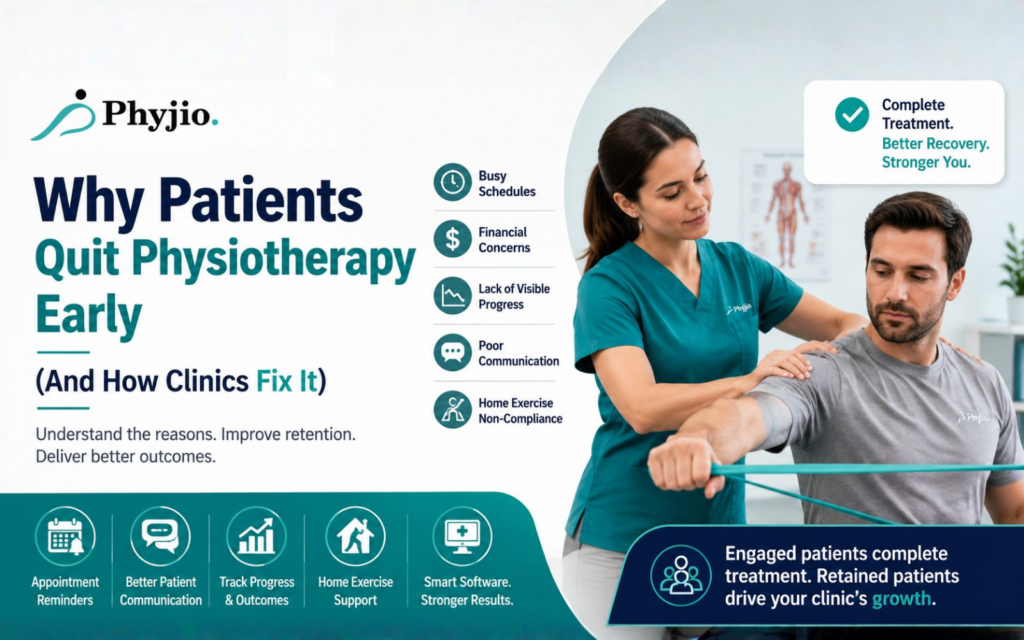

Patient retention is one of the most underestimated growth levers in physiotherapy practice management. Most clinic owners invest heavily in attracting new patients but give far less attention to keeping the ones they already have.
That is a costly mistake.
Research consistently shows that retaining an existing patient costs significantly less than acquiring a new one. In healthcare, where trust and continuity of care directly affect treatment outcomes, patient retention is not just a business metric. It is a clinical responsibility.
For physiotherapy clinics specifically, retention challenges are real and persistent. Patients start treatment, feel a little better after a few sessions, and stop showing up. Schedules fall apart. Revenue becomes unpredictable. And the patients who could have recovered fully end up dealing with recurring problems months later.
This guide covers everything you need to know about increasing patient retention in a physiotherapy clinic. From understanding why patients leave to implementing the right strategies, communication frameworks, and technology tools, this is a complete roadmap for building a clinic where patients stay, complete their care, and keep coming back.
Summary
Patient retention in physiotherapy refers to a clinic’s ability to keep patients engaged and attending throughout their full course of treatment and beyond.
Key takeaways from this guide:
The average physiotherapy clinic loses a significant portion of its patients before treatment is complete, which directly impacts revenue and patient outcomes.
Poor communication, weak follow-up systems, and scheduling difficulties are the top reasons patients stop attending.
Personalized treatment plans, automated reminders, progress tracking, and telehealth integration are among the most effective retention strategies.
Physiotherapy practice management software plays a central role in automating retention workflows and improving patient engagement.
Measuring retention metrics is essential for identifying gaps and improving clinic performance over time.
What Is Patient Retention in a Physiotherapy Clinic?
Patient retention in a physiotherapy clinic is the ability of a clinic to keep patients actively engaged in their prescribed treatment plans from the initial appointment through to the completion of care and ongoing wellness visits.
A retained patient is one who attends scheduled sessions consistently, follows through on their treatment plan, completes their recommended care program, and returns for follow-up or preventive care when needed.
Patient retention is measured using a retention rate, which is the percentage of patients who continue treatment over a defined period compared to those who started.
It is important to distinguish patient retention from patient acquisition. Acquisition refers to bringing new patients into the clinic. Retention refers to keeping those patients engaged once they arrive. Both matter, but retention has a far greater impact on long-term clinic stability and revenue because retained patients generate recurring revenue, refer others, and tend to require less administrative effort to manage.
In the context of physiotherapy, retention also has a direct clinical dimension. Treatment adherence is closely tied to patient outcomes. A patient who drops out of care early is far less likely to achieve full recovery, which increases the risk of re-injury, chronic pain, and long-term functional decline.
Why Patient Retention Is Important for Physiotherapy Clinics
Revenue Stability
Physiotherapy clinics operate on appointment-based revenue models. When patients drop out of treatment early, that revenue disappears. Each unused appointment slot represents lost income that is rarely recovered on short notice.
A clinic that can improve its retention rate by even a modest margin will see a measurable improvement in monthly revenue without increasing its marketing budget.
Studies in healthcare economics suggest that increasing patient retention by just five percent can increase revenue by anywhere from 25 to 95 percent over time, depending on the service model and patient lifetime value.
Improved Treatment Outcomes
Physiotherapy is a process, not a one-time event. Recovery from musculoskeletal injuries, post-surgical rehabilitation, chronic pain management, and neurological conditions all require consistent, structured treatment over multiple sessions.
When patients attend their full course of care, they achieve better functional outcomes, experience less pain recurrence, and return to daily activities faster. Retained patients are healthier patients.
This matters not just clinically but reputationally. Clinics that consistently produce strong outcomes attract more referrals and build stronger relationships with referring physicians and specialists.
Higher Patient Lifetime Value
Patient lifetime value refers to the total revenue a clinic can expect from a single patient over the course of their relationship with the clinic. Retained patients who return for follow-up care, wellness programs, or new episodes of treatment represent significantly higher lifetime value than one-time visitors.
A patient who comes in for a shoulder injury, completes treatment, and returns six months later for lower back pain is worth far more to the clinic than a patient who attends two sessions and disappears.
Increased Referrals
Satisfied, long-term patients are a clinic’s most powerful marketing asset. Patients who complete care and achieve meaningful recovery are far more likely to refer friends, family members, and colleagues to the clinic.
Word-of-mouth referrals from retained patients consistently produce higher conversion rates than any paid marketing channel. Building a base of loyal, engaged patients is one of the most cost-effective growth strategies available to physiotherapy clinics.
Better Clinic Reputation
Online reviews, patient testimonials, and community reputation are all influenced heavily by patient satisfaction and treatment completion. Patients who drop out early rarely leave positive reviews. Patients who complete care and feel genuinely supported are far more likely to share positive experiences.
In an increasingly competitive healthcare market, clinic reputation directly affects new patient acquisition. Retention and reputation reinforce each other in a continuous cycle.
Common Reasons Patients Stop Physiotherapy Treatment
Understanding why patients leave is the first step toward preventing it. The causes of patient drop-off in physiotherapy are well-documented and almost always addressable with the right systems and strategies.
Poor Communication
Many patients leave physiotherapy because they feel disconnected from their care team. If a patient does not understand their diagnosis, the rationale for their treatment plan, or what progress looks like, they are unlikely to stay committed to a multi-session program.
Clear, ongoing communication between physiotherapists and patients builds trust and reinforces the value of continued care.
Lack of Follow-Up
When a patient misses an appointment and nobody from the clinic reaches out, the message received is that their absence does not matter. A single missed session without follow-up is one of the most common entry points to full patient dropout.
Proactive follow-up, whether by phone, text, or email, is a simple but powerful retention mechanism.
Scheduling Difficulties
Busy patients will not rearrange their lives around inconvenient appointment times. Clinics that offer limited scheduling windows, slow booking processes, or poor rescheduling flexibility will lose patients to more accessible competitors.
Flexible scheduling, including early morning, evening, and weekend options, along with easy online booking, reduces friction and improves retention.
Long Wait Times
Both in-clinic wait times and delays in getting initial appointments create negative first impressions that are difficult to overcome. Patients who feel their time is not respected are unlikely to remain loyal.
Financial Concerns
Cost is a genuine barrier for many patients, particularly those who are managing out-of-pocket expenses after insurance coverage limits are reached. If patients are not fully informed about their financial obligations upfront, unexpected costs become a common reason for dropping out.
Transparent billing, payment plan options, and proactive financial conversations with patients reduce cost-related drop-offs.
Weak Patient Engagement
Patients who feel like passive recipients of treatment rather than active participants in their recovery are more likely to disengage. Engagement requires more than showing up for sessions. It requires patients to understand their condition, believe in their treatment plan, and feel motivated to follow through.
Lack of Visible Progress
If patients do not feel they are getting better, they stop coming. This is one of the most critical retention challenges in physiotherapy. Progress in rehabilitation is often gradual and not always obvious to the patient without deliberate measurement and communication.
Regularly tracking and sharing objective outcome measures, such as pain scores, range of motion, functional assessments, and strength testing, helps patients see how far they have come and why continuing matters.
Causes and Solutions Overview
|
Cause of Patient Drop-Off |
Solution |
|---|---|
|
Poor communication |
Regular check-ins, clear treatment explanations, and open dialogue |
|
No follow-up after missed sessions |
Automated follow-up workflows through clinic software |
|
Scheduling difficulties |
Online booking, flexible hours, and easy rescheduling |
|
Long wait times |
Streamlined scheduling and clinic flow management |
|
Financial concerns |
Upfront cost transparency and flexible payment options |
|
Low engagement |
Patient education, goal-setting, and shared decision-making |
|
No visible progress |
Regular outcome tracking and progress reporting |
Top Strategies to Increase Patient Retention in a Physiotherapy Clinic
Deliver an Exceptional Patient Experience
The patient experience begins the moment a patient first contacts the clinic and continues through every interaction throughout the treatment journey. Every touchpoint is an opportunity to build loyalty or lose it.
A consistently excellent patient experience includes a warm and professional reception, minimal wait times, clean and welcoming clinic spaces, attentive physiotherapists who listen actively, and a genuine sense that the clinic cares about the patient as a person, not just as an appointment slot.
Clinics that invest in staff training around patient communication, empathy, and service quality consistently outperform those that focus only on clinical protocols.
First impressions are particularly important. A new patient who feels genuinely welcomed, well-informed, and confident in their care team after their first appointment is significantly more likely to complete their treatment program.
Improve Communication Throughout the Patient Journey
Communication is the foundation of retention. Patients need clear information at every stage of their care.
At the initial assessment, explain the diagnosis, the proposed treatment plan, the expected timeline for recovery, and what the patient should expect at each stage. This sets realistic expectations and builds trust.
During treatment, provide regular progress updates. Celebrate improvements, no matter how small. Remind patients of the goals they set at the beginning and show them how far they have come.
Between sessions, maintain contact. Send educational content related to the patient’s condition, tips for at-home exercises, or wellness advice relevant to their recovery. This keeps the clinic present in the patient’s mind without being intrusive.
After treatment completion, follow up. A simple check-in message or call two to four weeks after discharge shows patients that the clinic genuinely cares about their long-term wellbeing and keeps the relationship open for future care.
Use Automated Appointment Reminders
No-shows and late cancellations are among the most disruptive and costly problems in physiotherapy practice management. Automated appointment reminders are one of the simplest and most effective tools available to reduce them.
Sending reminders via SMS, email, or push notification at 48 hours and again at 24 hours before an appointment has been shown to reduce no-show rates significantly in healthcare settings.
Effective reminders do more than just state the appointment time. They can include preparation instructions, parking information, a link to complete pre-appointment forms, and an easy option to reschedule if needed.
Automation ensures consistency. Unlike manual reminder calls, which depend on staff availability, automated systems send reminders reliably for every patient, every time.
Create Personalized Treatment Plans
Generic treatment protocols do not inspire patient commitment. Personalized treatment plans that reflect each patient’s specific condition, lifestyle, goals, and preferences are far more effective at generating engagement and adherence.
A runner with a knee injury needs a very different plan than a desk worker recovering from lumbar surgery. A patient whose primary goal is to return to sport needs different motivators and milestones than a patient who simply wants to manage daily pain.
Taking the time to understand each patient’s individual goals and designing a treatment plan that speaks directly to those goals creates a sense of ownership. Patients who feel their plan was built for them are more likely to stay committed to it.
Setting measurable, patient-centered goals and reviewing them regularly reinforces the purpose of each session and gives patients clear reasons to keep attending.
Educate Patients About Their Recovery
Patient education is one of the most powerful and underused retention tools in physiotherapy. When patients understand their condition, the science behind their treatment, and the risks of dropping out early, they make better decisions about their care.
Education should begin at the first appointment and continue throughout treatment. This includes verbal explanations during sessions, printed or digital materials, home exercise guides, and links to relevant videos or articles.
Educated patients experience less anxiety about their condition, set more realistic expectations, report higher satisfaction with their care, and are far more likely to complete their treatment program.
Clinics that build patient education into their standard care workflows see measurable improvements in adherence, outcomes, and retention rates.
Track Outcomes and Show Progress
Progress tracking is both a clinical tool and a retention strategy. Patients need to see evidence that their treatment is working.
Standardized outcome measures such as pain scores, functional assessments, range of motion measurements, and patient-reported outcomes questionnaires provide objective data that demonstrates progress over time.
Sharing this data with patients at regular intervals during their treatment creates a powerful visual narrative of recovery. Seeing a graph that shows pain decreasing or functional capacity improving makes it much harder for a patient to rationalize quitting.
Technology plays a significant role here. Modern physiotherapy software platforms allow clinicians to record outcome measures digitally, generate progress reports automatically, and share results with patients through patient portals or messaging systems.
Offer Telehealth and Hybrid Care
Telehealth has permanently changed patient expectations around care access. Physiotherapy clinics that offer virtual appointments, either as a standalone service or as part of a hybrid care model, have a meaningful advantage in patient retention.
For patients who miss a session due to travel, illness, bad weather, or work commitments, a telehealth alternative eliminates the gap in care that often leads to full dropout. Rather than skipping a session entirely, the patient completes it virtually, maintaining momentum and engagement.
Telehealth is also valuable for follow-up appointments, home exercise reviews, progress check-ins, and patient education sessions that do not require hands-on assessment.
Clinics that integrate telehealth into their service offering report higher appointment completion rates and improved patient satisfaction among working-age adults and those in rural or underserved areas.
Build Long-Term Relationships
Retention is not just about keeping patients engaged during a single episode of care. It is about building relationships that last for years.
This means staying connected with patients after their treatment ends. Seasonal wellness communications, birthday messages, annual check-in invitations, and informative health content delivered by email or SMS keep the clinic present in the patient’s mind long after discharge.
When patients do experience a new injury or flare-up of a chronic condition, the clinic they have a relationship with is the one they call first.
A formal patient wellness program or maintenance care option gives discharged patients a structured reason to return. Monthly or quarterly maintenance sessions, group exercise classes, or wellness screenings convert one-time patients into long-term clinic advocates.
Implement Patient Feedback Systems
Collecting patient feedback regularly is essential for understanding the patient experience and identifying retention risks before they become drop-offs.
Post-appointment satisfaction surveys, Net Promoter Score questionnaires, and informal check-ins during treatment all provide valuable insight into how patients feel about their care.
When patients know their feedback is actively solicited and genuinely considered, they feel valued. When feedback is acted upon and patients see tangible changes as a result, trust deepens significantly.
Negative feedback, handled professionally and promptly, is an opportunity to recover at-risk patients and prevent others from having the same experience.
Encourage Reviews and Referrals
Positive reviews on Google, Healthgrades, and other healthcare platforms increase clinic visibility and build social proof that attracts new patients. More importantly, referrals from existing patients represent the highest-quality patient acquisition channel available to a physiotherapy clinic.
Encouraging satisfied patients to share their experience and refer friends and family should be part of every clinic’s retention and growth strategy.
This does not require aggressive marketing tactics. A simple, sincere request from a physiotherapist at the end of a successful treatment program, combined with an easy mechanism to leave a review or make a referral, is sufficient for most patients who have had a genuinely positive experience.
How Physiotherapy Practice Management Software Improves Patient Retention
Physiotherapy practice management software is the operational backbone of a modern physiotherapy clinic. The right platform does far more than manage appointments and billing. It actively supports patient retention through automation, communication, engagement, and analytics.
Appointment Scheduling and Management
Efficient, flexible scheduling is fundamental to retention. Practice management software enables patients to book, reschedule, and cancel appointments through online portals or mobile apps at any time, without needing to call the clinic.
This reduces the friction associated with scheduling changes, which is a common drop-off point. A patient who can quickly reschedule a missed appointment online is far more likely to continue care than one who has to navigate a phone-based booking process.
Automated Appointment Reminders
As discussed earlier, automated reminders are one of the most straightforward and effective retention tools available. Practice management software automates this process entirely, sending SMS, email, or app-based reminders according to pre-configured schedules without requiring staff intervention.
Advanced platforms allow reminders to be customized by appointment type, patient preference, or communication channel, improving open rates and response rates significantly.
Patient Communication and CRM Capabilities
A physiotherapy CRM, or customer relationship management system integrated into the practice management platform, enables clinics to manage patient relationships at scale.
CRM functionality allows clinics to segment patients by condition, treatment stage, or engagement level, and deliver targeted communications accordingly. A patient in the middle of a rehabilitation program receives different messages than one who was discharged three months ago.
Automated follow-up workflows can be triggered by specific events, such as a missed appointment, a completed treatment program, or an approaching re-assessment date, ensuring that no patient falls through the cracks without intentional outreach.
Follow-Up Workflows
One of the most common and costly retention failures in physiotherapy is the absence of follow-up after a missed session. Practice management software addresses this by automating follow-up communications triggered by no-shows or cancellations.
When a patient misses an appointment, the system automatically sends a message acknowledging the missed session and offering easy rescheduling options. This simple automated touchpoint dramatically reduces the number of patients who drift away after a single missed visit.
Telehealth Integration
Integrated telehealth functionality within the practice management platform allows clinics to offer video-based consultations without requiring patients to use separate apps or platforms.
This reduces barriers to virtual care and makes it easy for patients to transition between in-person and online sessions as their schedule requires.
Patient Engagement Tracking
Modern practice management software tracks patient engagement metrics in real time. Appointment adherence rates, session completion percentages, portal login frequency, and communication response rates all provide early indicators of retention risk.
Clinicians and clinic administrators can use this data to identify patients who are beginning to disengage and intervene proactively before they drop out.
Retention Analytics and Reporting
Comprehensive reporting dashboards within practice management platforms allow clinic owners and managers to monitor retention metrics at the clinic, practitioner, and patient level.
Tracking retention rates over time, identifying patterns in patient dropout, and correlating retention performance with specific practitioners, treatment types, or scheduling patterns provides the data needed to make informed, strategic improvements.
Practical Example
A physiotherapy clinic implementing a practice management platform with integrated CRM and automation discovers that its average treatment completion rate is 58 percent, well below the target of 80 percent. Analytics reveal that dropout rates peak between sessions three and five, correlating with patients who have not received a progress update or educational communication since their initial appointment.
The clinic implements automated progress summaries sent after sessions two and four, combined with a personalized message from the treating physiotherapist. Within three months, the treatment completion rate rises to 72 percent, and patient satisfaction scores improve measurably.
This is a realistic scenario that plays out in clinics that use data-driven retention management.
The Role of Patient Engagement in Retention
Patient engagement is not a single action. It is an ongoing state of active participation in one’s own care. Highly engaged patients attend appointments consistently, follow home exercise programs, communicate openly with their care team, and take an active interest in their recovery progress.
Communication Strategies
Engagement begins with communication. Physiotherapists who take the time to explain the reasoning behind treatment decisions, invite questions, and check in on patient concerns create a fundamentally different therapeutic relationship than those who simply administer treatment without dialogue.
Regular communication between sessions, whether through educational emails, exercise reminders, or motivational messages, maintains the patient’s connection to the clinic and their treatment plan.
Educational Content
Providing patients with condition-specific educational content, such as videos explaining their diagnosis, guides to managing symptoms at home, and information about the physiological process of healing, reduces anxiety, sets realistic expectations, and reinforces the value of continued treatment.
Clinics that build content libraries and deliver relevant educational materials to patients at appropriate points in their treatment journey see significantly higher engagement and completion rates.
Exercise Adherence
Home exercise programs are a critical component of physiotherapy treatment. Research consistently shows that patients who adhere to their prescribed home exercises achieve faster and more complete recovery than those who do not.
However, home exercise adherence is notoriously poor without active support. Digital home exercise prescription tools, integrated within practice management platforms, allow physiotherapists to assign exercises with instructional videos, track completion, and follow up on adherence through the patient portal or app.
This level of engagement between sessions extends the therapeutic relationship beyond the clinic walls and improves outcomes measurably.
Follow-Up Care
Post-discharge follow-up is a frequently overlooked engagement strategy. Many clinics discharge patients without any structured plan for ongoing contact, missing an opportunity to maintain the relationship and identify patients who may need additional care.
Scheduled post-discharge check-ins at two weeks, one month, and three months after treatment completion keep the clinic connected to its patient base and create natural opportunities for patients to return for maintenance care or address emerging problems before they become serious.
Progress Tracking
Regular, objective measurement of patient progress is one of the most effective engagement tools available to physiotherapists. When patients can see their improvement quantified, motivation increases and the rationale for continuing treatment becomes self-evident.
Using standardized outcome measures and sharing results with patients through progress reports, visual charts, or dashboard summaries in a patient portal transforms abstract clinical data into a compelling personal narrative of recovery.
Metrics Every Physiotherapy Clinic Should Track
Effective retention management requires consistent measurement. Clinics that track the right metrics can identify problems early, make evidence-based decisions, and monitor the impact of retention initiatives over time.
|
Metric |
Why It Matters |
|---|---|
|
Patient Retention Rate |
Measures the percentage of patients who continue treatment over a defined period. Core indicator of clinic health. |
|
No-Show Rate |
Tracks appointment non-attendance. High no-show rates signal communication, scheduling, or engagement problems. |
|
Appointment Adherence Rate |
Measures how consistently patients attend their scheduled appointments across their full treatment course. |
|
Treatment Completion Rate |
Tracks the percentage of patients who complete their full prescribed treatment program. Direct indicator of care continuity. |
|
Referral Rate |
Measures how often existing patients refer new patients. High referral rates indicate strong satisfaction and loyalty. |
|
Patient Satisfaction Score |
Captures patient experience feedback. Identifies service quality issues before they escalate to dropout. |
|
Patient Lifetime Value |
Estimates total revenue generated per patient over the full duration of their relationship with the clinic. |
|
Cancellation Rate |
Tracks appointment cancellations. High rates may indicate scheduling friction, financial concerns, or disengagement. |
|
Re-engagement Rate |
Measures success in re-activating lapsed patients. Indicates effectiveness of win-back communication strategies. |
Tracking these metrics monthly, and comparing them over time, provides the operational intelligence needed to manage retention proactively rather than reactively.
Common Retention Challenges and How to Solve Them
Challenge: High No-Show Rate
Problem: Patients frequently miss appointments without notice, leaving gaps in the schedule and lost revenue.
Solution: Implement automated multi-channel appointment reminders at 48 and 24 hours before each session. Make rescheduling frictionless through an online portal. Follow up with every no-show within 24 hours with a re-booking invitation.
Challenge: Patients Drop Out After Initial Sessions
Problem: Many patients attend two or three sessions and then stop, often feeling that they are “good enough” to discontinue care.
Solution: Set explicit outcome goals at the first appointment and educate patients about the risks of incomplete treatment. Send progress updates after early sessions to reinforce the value of continuing. Use outcome tracking data to show patients how much further they have to go.
Challenge: Poor Treatment Adherence Between Sessions
Problem: Patients do not follow through on home exercise programs, reducing the effectiveness of in-clinic treatment and slowing progress.
Solution: Prescribe home exercises through a digital platform with instructional videos and progress tracking. Send adherence reminders via automated messaging. Review home exercise performance at the start of each session and celebrate consistency.
Challenge: Financial Drop-Off
Problem: Patients stop attending when they reach their insurance coverage limit or face unexpected out-of-pocket costs.
Solution: Conduct a financial conversation early in the patient journey, before coverage limits become an issue. Offer flexible payment plans. Communicate the long-term cost of incomplete treatment, including the risk of re-injury and future care costs.
Challenge: Patients Feel No Progress
Problem: Patients who do not perceive improvement disengage rapidly.
Solution: Use standardized outcome measures at every assessment milestone and share results visually with patients. Frame progress conversations around functional goals rather than symptom reduction alone, since symptom improvement may lag behind functional gains.
Challenge: Loss of Contact After Discharge
Problem: Patients complete treatment and are never contacted again, leading to low re-engagement rates when new problems arise.
Solution: Implement a structured post-discharge communication sequence with check-ins at two weeks, one month, and three months. Offer maintenance care programs. Send seasonal wellness reminders and educational content to keep the clinic relevant in the patient’s life.
How AI Is Transforming Patient Retention in Physiotherapy
Artificial intelligence is beginning to reshape how physiotherapy clinics manage patient engagement and retention. While widespread adoption is still developing, the capabilities being introduced are significant and are already available in advanced healthcare SaaS platforms.
Predictive Analytics for Early Intervention
AI-powered analytics can analyze patterns in patient behavior, such as appointment adherence, communication response rates, and session feedback, to identify patients who are at elevated risk of dropping out before it happens.
This allows clinicians and clinic managers to intervene with targeted outreach before a patient makes the decision to leave, dramatically improving retention outcomes compared to reactive approaches.
Automated Patient Outreach
AI-driven communication systems can personalize and automate outreach at a scale that is impossible for human staff to replicate manually. Based on patient data, behavioral signals, and treatment stage, the system can generate and deliver contextually relevant messages to each patient without requiring staff time for every interaction.
Smart Scheduling
AI-powered scheduling tools can analyze appointment patterns, patient preferences, and demand data to optimize appointment booking, reduce wait times, and minimize scheduling conflicts. This improves the patient experience and reduces friction-related drop-offs.
Personalized Engagement at Scale
AI enables clinics to deliver genuinely personalized engagement to hundreds or thousands of patients simultaneously. Rather than sending the same newsletter to every patient, AI-driven platforms can tailor content, exercise recommendations, and communication timing to each individual based on their condition, treatment stage, and engagement profile.
Retention Forecasting
AI-powered retention forecasting tools can model future retention rates based on current trends and patient cohort data, giving clinic managers advance warning of potential drops in revenue or appointment volumes and enabling proactive strategy adjustments.
AI-Powered Patient Communication
Natural language processing capabilities within patient communication platforms are making it possible for clinics to handle routine patient inquiries, appointment confirmations, and follow-up conversations through intelligent automation, freeing clinical staff to focus on high-value patient interactions.
Best Practices for Building a Patient-Centric Physiotherapy Clinic
A patient-centric clinic is one where every operational decision, clinical protocol, and communication strategy is designed around the patient’s experience and outcomes. These clinics consistently achieve higher retention rates, better clinical outcomes, and stronger community reputations.
Practical checklist for building a patient-centric physiotherapy clinic:
Train all staff, clinical and administrative, in patient communication and empathy.
Create a welcoming, clean, and comfortable clinic environment that reflects respect for the patient.
Make booking, rescheduling, and cancellation as easy as possible through online self-service tools.
Conduct thorough initial assessments that include explicit goal-setting with each patient.
Develop personalized, goal-oriented treatment plans for every patient.
Educate patients at every stage of their journey about their condition and recovery process.
Use standardized outcome measures consistently and share results with patients regularly.
Send automated appointment reminders through the patient’s preferred communication channel.
Follow up every missed appointment within 24 hours with a re-booking invitation.
Implement a structured post-discharge communication sequence for every patient.
Actively solicit patient feedback and act on what is shared.
Encourage completed-treatment patients to leave reviews and refer friends and family.
Use practice management software to automate routine retention workflows and track engagement metrics.
Monitor retention metrics monthly and adjust strategies based on data.
Build a culture of continuous improvement by reviewing retention performance at regular team meetings.
Future Trends in Physiotherapy Patient Retention
The physiotherapy sector is evolving rapidly, and the tools and strategies available for patient retention will continue to advance significantly in the coming years.
AI-Powered Patient Engagement
As artificial intelligence becomes more embedded in healthcare SaaS platforms, physiotherapy clinics will have access to increasingly sophisticated tools for predicting patient behavior, personalizing engagement, and automating retention workflows with minimal manual effort.
Personalized Healthcare at Scale
Advances in digital health technology will make it increasingly possible to deliver truly individualized care to every patient, tailoring treatment protocols, home exercise programs, educational content, and follow-up communications to each person’s specific profile, preferences, and progress data.
Remote Rehabilitation
Wearable technology, motion capture tools, and AI-assisted exercise analysis are making remote physiotherapy more clinically effective and accessible. Remote rehabilitation programs will allow clinics to serve patients who cannot attend in person while maintaining the engagement and clinical oversight necessary for good outcomes.
Wearable Technology Integration
Wearable devices that track movement, pain levels, activity, and recovery metrics will increasingly feed data directly into practice management platforms, giving clinicians real-time visibility into patient progress and adherence between sessions.
Digital Patient Experience Platforms
The patient experience will become increasingly digital, with patients managing their care through comprehensive portals and apps that integrate appointment management, home exercise programs, educational content, telehealth access, and outcome tracking in a single interface.
Automation-Driven Care Management
Automation will continue to reduce the administrative burden on physiotherapy clinic staff while improving the consistency and quality of patient communication. From intake forms to discharge follow-ups, automation will handle routine workflows, freeing clinicians to focus on the therapeutic relationships that make the greatest difference to patient outcomes and loyalty.
Frequently Asked Questions
What is a good patient retention rate for a physiotherapy clinic?
A good patient retention rate for a physiotherapy clinic is generally considered to be 75 percent or higher. This means that at least 75 percent of patients who begin a treatment program complete their full prescribed course of care. High-performing clinics often achieve rates of 80 to 90 percent through proactive communication, engagement strategies, and follow-up systems.
Why do physiotherapy patients stop attending sessions?
Physiotherapy patients stop attending for several common reasons, including feeling better before completing treatment, poor communication from the clinic, scheduling difficulties, unexpected costs, lack of visible progress, and no follow-up after a missed appointment. Addressing each of these factors systematically is essential for improving retention rates.
How can physiotherapy software improve patient retention?
Physiotherapy practice management software improves retention by automating appointment reminders, enabling follow-up workflows, managing patient communication through integrated CRM tools, tracking engagement and outcome metrics, supporting telehealth delivery, and providing analytics that identify at-risk patients before they drop out.
What is the most effective retention strategy for physiotherapy clinics?
There is no single most effective strategy, but the combination of personalized treatment plans, consistent patient communication, automated appointment reminders, regular progress tracking, and proactive follow-up after missed sessions produces the strongest results. Clinics that implement all of these strategies simultaneously achieve the highest retention rates.
How do appointment reminders reduce patient drop-offs?
Appointment reminders reduce patient drop-offs by keeping upcoming sessions top of mind, reducing memory-related no-shows, providing easy rescheduling options for patients who cannot attend, and demonstrating that the clinic values the patient’s participation. Studies in healthcare settings consistently show that automated reminders reduce no-show rates by 20 to 40 percent.
How can clinics improve treatment adherence?
Clinics can improve treatment adherence by setting clear recovery goals with patients from the outset, educating patients about the consequences of incomplete treatment, prescribing home exercises through digital platforms with tracking and reminders, sharing regular progress updates, and maintaining consistent communication between sessions.
What role does patient engagement play in retention?
Patient engagement is directly correlated with retention. Highly engaged patients attend sessions consistently, follow home exercise programs, communicate openly with their care team, and are far less likely to drop out of treatment. Engagement is built through education, personalized care, regular communication, progress sharing, and genuine therapeutic relationship development.
How do telehealth services improve patient retention?
Telehealth services improve patient retention by eliminating distance and scheduling barriers that cause patients to miss sessions. When a patient cannot attend in person due to travel, illness, or work commitments, a telehealth option allows them to complete the session virtually, maintaining care continuity. This eliminates a common entry point to full dropout and increases overall appointment completion rates.
Final Conclusion
Patient retention is one of the most important and highest-impact priorities for any physiotherapy clinic that wants to grow sustainably, deliver exceptional clinical outcomes, and build a strong community reputation.
The data is clear. Retaining patients is more cost-effective than acquiring new ones. Patients who complete their treatment programs achieve better outcomes and are more likely to refer others. Clinics with high retention rates enjoy greater revenue stability, stronger practitioner satisfaction, and more meaningful clinical impact.
The good news is that most patient drop-off is preventable. With the right strategies, systems, and technology in place, physiotherapy clinics can dramatically improve retention rates, reduce no-shows, and build lasting relationships with the patients they serve.
The path forward involves investing in communication, personalization, and technology simultaneously. No single tool or strategy is sufficient on its own. But a clinic that combines excellent patient care with proactive follow-up, intelligent automation, and data-driven management has every advantage needed to succeed.
Physiotherapy practice management software is the operational enabler that makes consistent, scalable retention possible. By automating the workflows that maintain patient engagement and providing the analytics needed to manage retention strategically, the right platform turns retention from a reactive challenge into a proactive competitive advantage.
For physiotherapy clinic owners and administrators who are serious about growth, now is the time to assess your current retention performance, identify the gaps in your patient engagement strategy, and invest in the tools and systems that will keep your patients engaged, your schedule full, and your clinic thriving.